The exception queue
Opens on what's off-plan and needs action: buys to place, promises at risk, kits that cannot build, margin moving away from plan.

Cadence Plan keeps the whole plan in view, surfaces the calls that need action today, explains the signal behind them, and writes approved moves back to NetSuite or Oracle Fusion, powered by Oracle EPM.
The planning surface your team works in every day, whether you turn on one capability or the full operating suite.
Opens on what's off-plan and needs action: buys to place, promises at risk, kits that cannot build, margin moving away from plan.
Every recommendation carries the drivers, the trailing actuals, and the confidence behind it, so planners trust the call.
Ask the plan a question in plain English and get an answer grounded in your live data, with the work shown.
Capabilities are how you sell it; rhythm is how teams run it. Inside Cadence the work is organized by Today, Plan, Act, Coordinate, and Evaluate.
Statistical and ML forecasting, promo lift, accuracy and FVA, lifecycle.
Time-phased MRP, multi-echelon planning, dynamic min/max, POs written back.
ATP, multi-level clear-to-build, allocation, backorders, and service commitments.
BOM and clear-to-build, capacity, finite scheduling, shop-floor handoff.
Health and working capital, aging and E&O, in-stock history, replenishment.
Landed cost and tariff per SKU, should-cost, margin, and what-if.
Consensus on one number, supply-demand reconciliation, executive rollup.
Budget, rolling forecast, pricing and margin, close and narrative.
No autonomous brain promising to run your business for you. Cadence puts AI agents inside the forecast, the queue, and the review you already run, with a person in the loop and the reasoning on screen.
Trend, seasonality, promo lift, and the drivers behind the number, on every line. Not a score you take on faith.
AI ranks the SKUs, orders, and plans that need a call today by impact, so planners open on the work that matters.
Every recommended buy, reschedule, or reorder shows its reasoning before approval, so nobody rubber-stamps a black box.
AI drafts the variance narrative from the numbers. The planner edits and signs off instead of starting from a blank cell.
Cadence reads your live plan and operational data, then writes approved actions back. It runs with NetSuite and Oracle Fusion, powered by Oracle EPM, or on its own.
Work queue, forecasts, in-grid editing, approvals, commentary, and write-back. The workspace planners live in.
Demand, inventory, margin, landed cost, warehouse, workforce, and order signals, read live.
Cadence can use EPM as the enterprise calc engine for scenarios, calc logic, and controls. NetSuite and Fusion stay the systems of record for execution.
Where Cadence posts the decision: approved POs, work orders, dates, quantities, and source-system updates.
Quick framework study only: palette, layout, motion language, and mark behavior. Not a content pass.
Highest emotion and least BI-generic. Needs the monochrome mark on dark surfaces.

 Planning that moves at the pace of the signal.
No quadrants, no hero image, no dashboard framing. The brand becomes type, motion rails, and a single deep field.
Keeps our original light palette, but replaces SaaS cards with a quieter map/terrain language.

Cadence is not another dashboard. It is the operating surface where planners see the signal, edit the plan, approve the move, and push the decision back to execution.
Forecasts, exceptions, scenarios, comments, approvals, and write-back live in one place, so the plan leaves the review as action instead of a follow-up spreadsheet.
Demand, inventory, orders, landed cost, warehouse, workforce, and finance signals come into the same planning surface.
Forecasts, scenarios, min/max, MRP, capacity, and margin logic run with the assumptions visible.
Cadence turns variance into ranked queues, accountable owners, plain-language reasoning, and approval flow.
Approved POs, work orders, dates, quantities, and plan decisions post back to NetSuite or Oracle Fusion.
Cadence is the workspace your team plans in. It reads your live plan and operational data, then writes approved actions back to the systems that execute.
Work queue, forecasts, in-grid editing, approvals, commentary, and write-back. The workspace planners live in.
Demand, inventory, margin, landed cost, warehouse, workforce, and order signals, read live.
Cadence can use EPM as the enterprise calc engine for scenarios, calc logic, and controls. NetSuite and Fusion stay the systems of record for execution.
Approved POs, work orders, transfer dates, quantities, and plan decisions post back to the ERP. EPM powers the plan; NetSuite and Fusion execute the transaction.
No autonomous brain promising to run your business for you. Cadence puts AI agents inside the forecast, the queue, and the review you already run, with a person in the loop and the reasoning on screen.
Trend, seasonality, promo lift, and drivers behind the number, on every line.
AI ranks the work by impact, so planners open on decisions that matter.
Every recommended buy, reschedule, or reorder shows its reasoning before approval.
AI drafts the variance narrative from the numbers. The planner edits and signs off.
Cadence keeps a planner in the loop: visible assumptions, recommendation drivers, approval history, and source-system write-back that can be traced.
Drivers, history, confidence, and constraints stay attached to the recommendation.
Cadence recommends and drafts. The planner approves before actions hit NetSuite or Fusion.
The decision, owner, timestamp, and write-back target remain visible after the move.
Start where the planning pain is sharpest, then compose the capabilities around the same Cadence rhythm: Today, Plan, Act, Coordinate, Evaluate.
Every deployment includes the same workbench foundation. Then Cadence turns on the capabilities that match how your teams plan, decide, and execute.
Opens on what's off-plan and needs action, not a blank grid. Buys to place, promises at risk, kits that cannot build.
Machine learning where history is rich, probabilistic methods for the intermittent tail, and what-if plans with visible assumptions.
Approved POs, work orders, transfer dates, and quantities post to NetSuite or Oracle Fusion. The plan leaves the meeting as transactions.
Statistical and ML forecasting, promo lift, accuracy and FVA, lifecycle.
Time-phased MRP, multi-echelon planning, dynamic min/max, POs written back.
Network rebalancing, hub-and-spoke transfers, cross-branch deployment.
ATP, multi-level clear-to-build, allocation, backorders.
BOM and clear-to-build, capacity, finite scheduling, shop-floor handoff.
Health and working capital, aging and E&O, in-stock history.
Line plans, size curves, open-to-buy, markdown, assortment.
Landed cost and tariff per SKU, should-cost, margin, what-if.
Promo planning, trade spend and funds, deduction management, ROI.
Consensus on one number, supply-demand reconciliation, executive rollup.
Budget, rolling forecast, pricing and margin, close and narrative.
Account reconciliation, intercompany, consolidation, and a governed close.
No autonomous brain promising to run your business for you. Cadence puts AI agents inside the forecast, the queue, and the review you already run.
Trend, seasonality, promo lift, and drivers behind the number, on every line.
AI ranks the work by impact, so planners open on decisions that matter.
Every recommended buy, reschedule, or reorder shows its reasoning before approval.
AI drafts the variance narrative from the numbers. The planner edits and signs off.
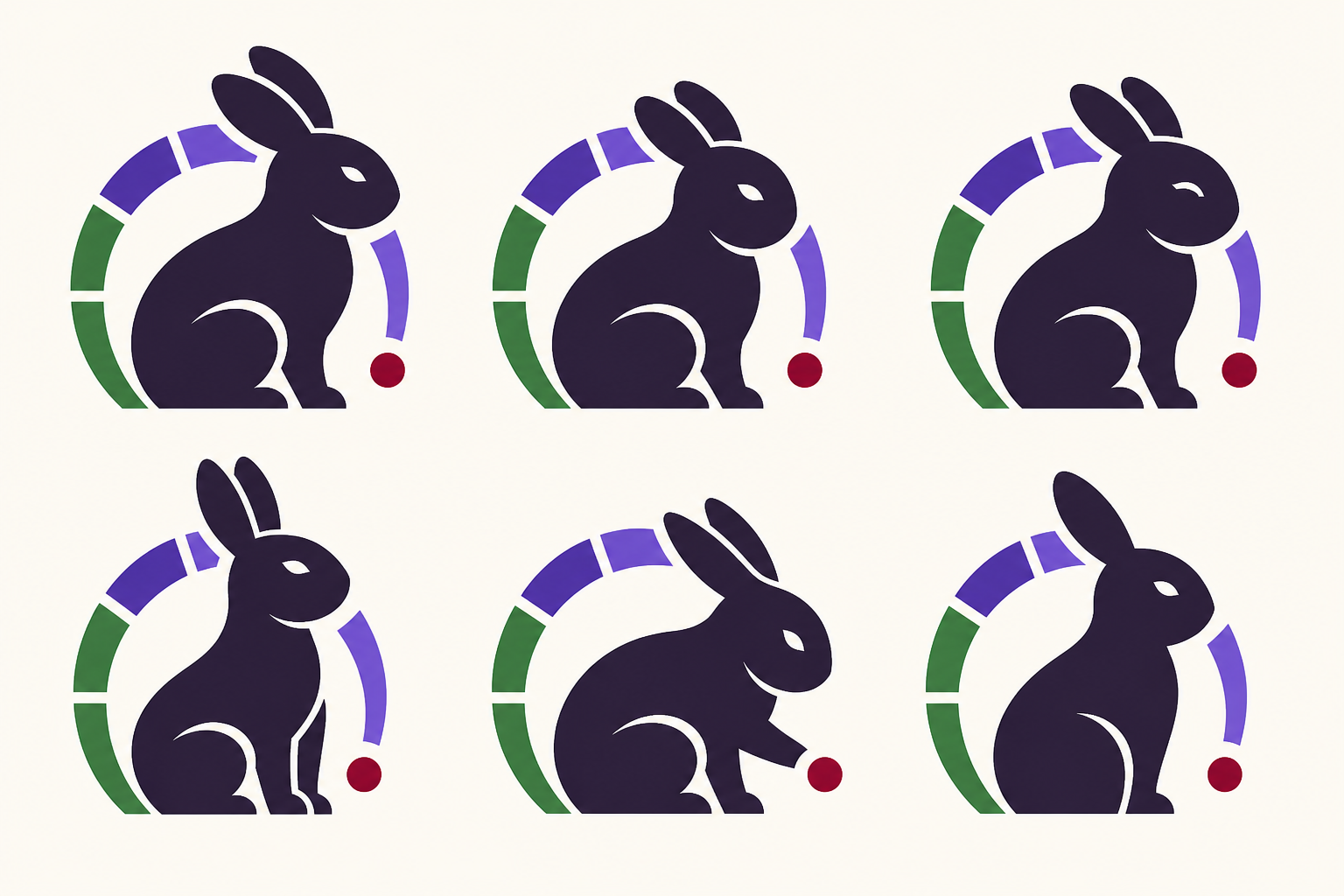
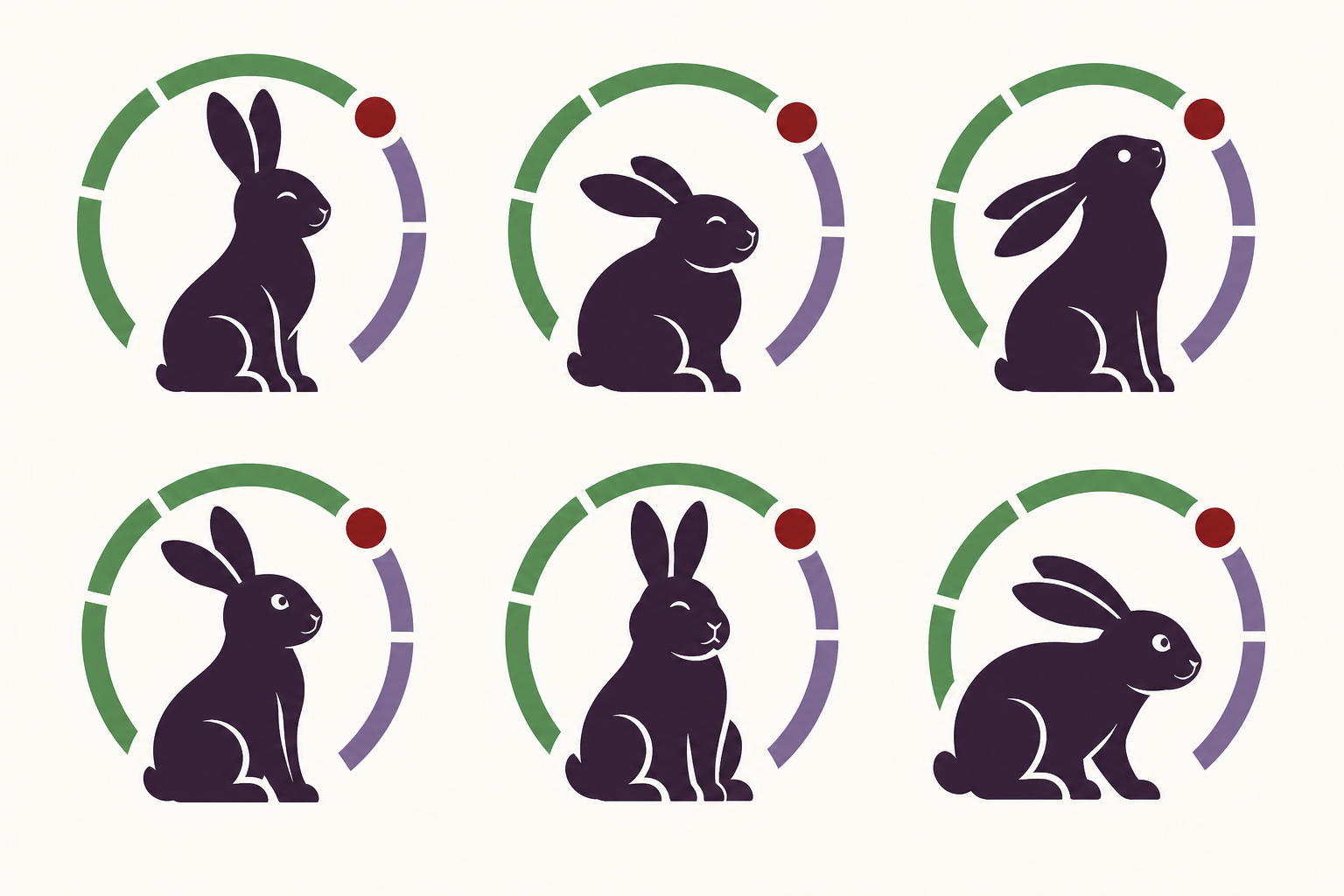
The bunny is winning because it adds warmth without losing the cadence signal: alert ears, fast response, a planning arc, and a richer red cue. This pass tests friendliness, icon-read, motion, and assistant personality in the same product context.
CadencePlan
The mark has to feel helpful beside planning decisions, not decorative or childish. Friendly, but still sharp enough for operating software.
CadencePlanStill the charm leader: stronger character, less generic, and the arc feels custom to the bunny.
 CadencePlan
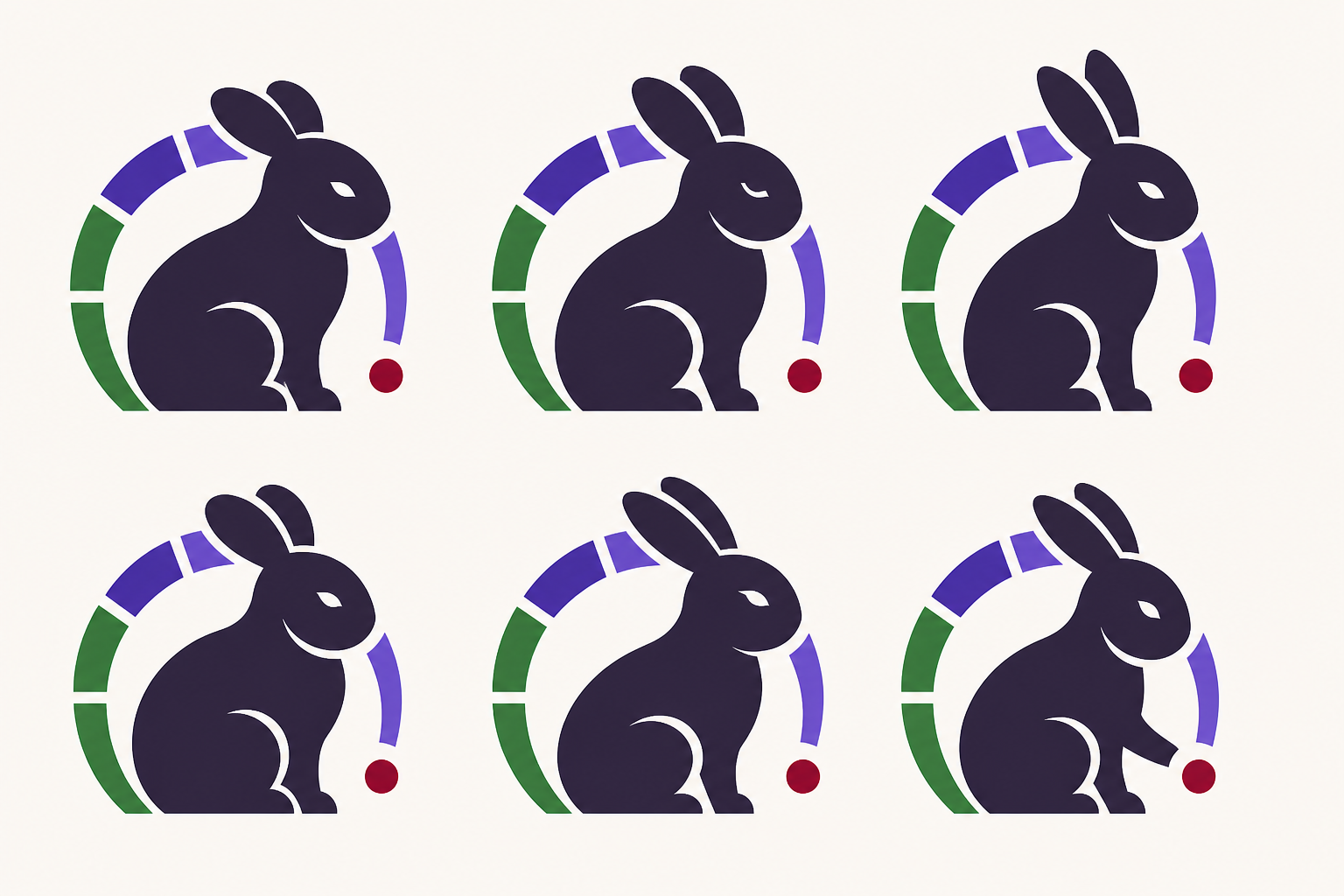
Cleaner and safer on expression; fuller body and softer ears are useful, but it loses some baseline personality.
Same fuller-body challenger, but the expression is stripped back: dot, oval, wedge, no-eye, and tiny notch options. Top-left and top-middle are the cleanest reads.
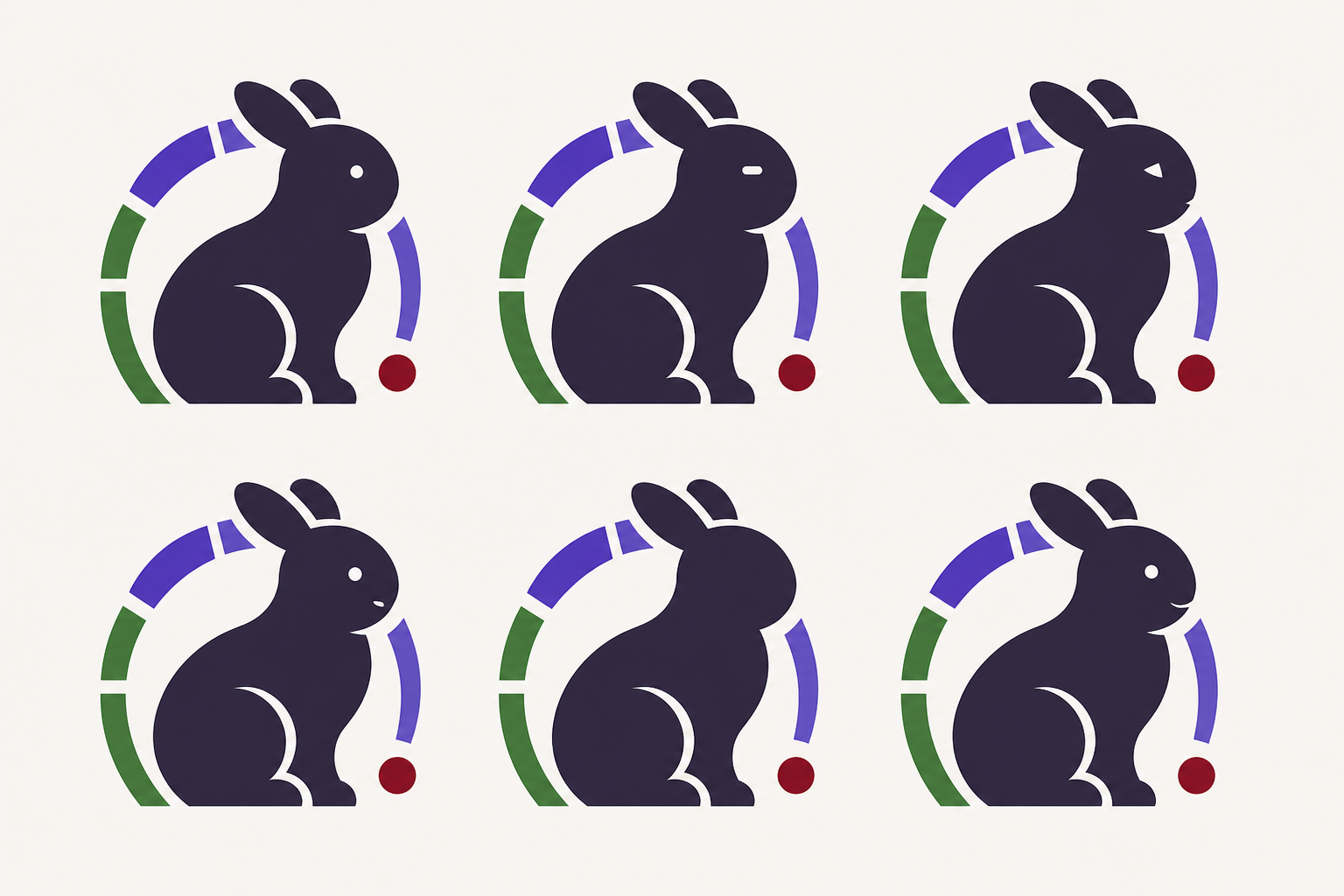
Cleaner and more premium, but intentionally restrained. Useful for proving the tiny neutral eye works without cute-expression baggage.
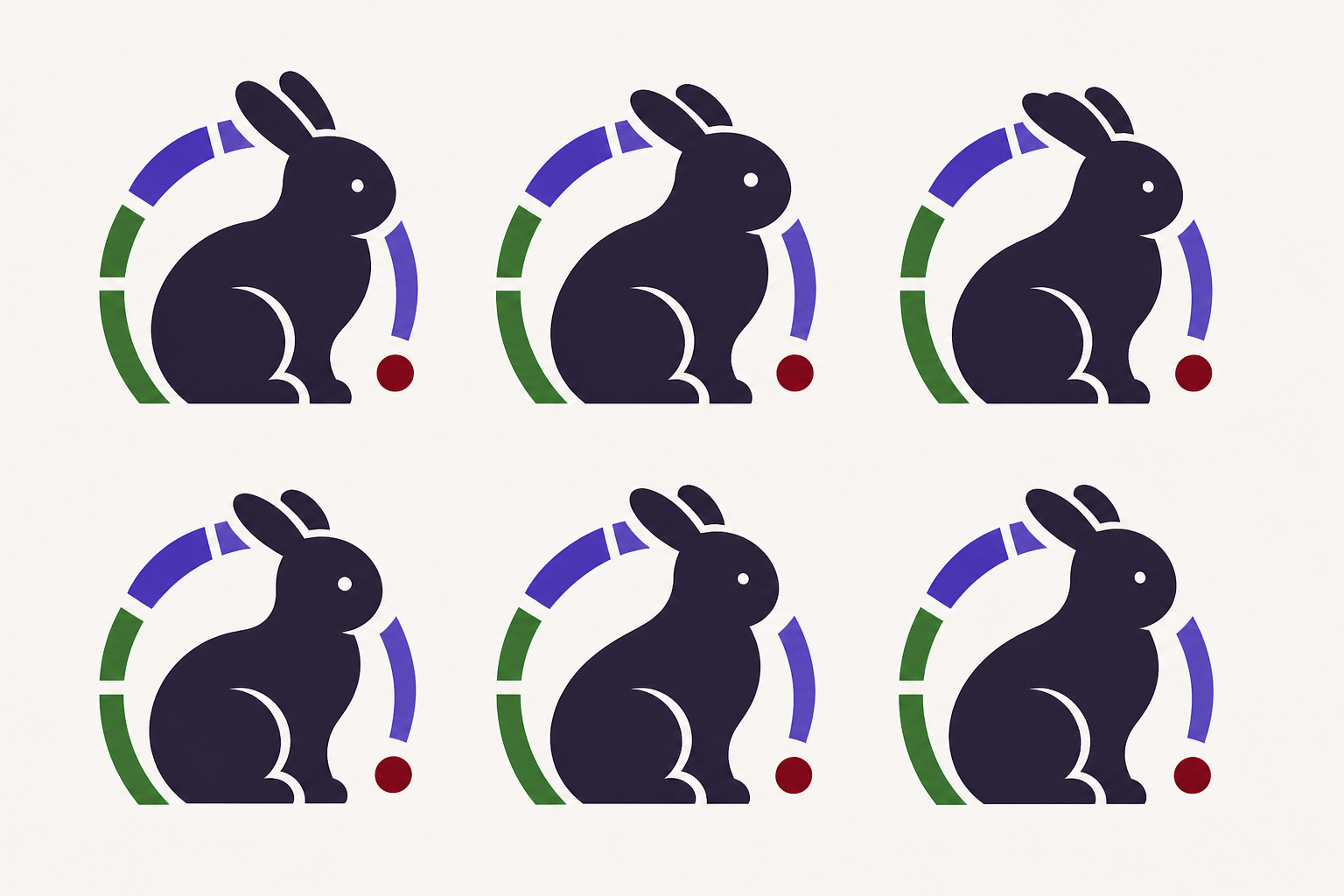
Best current safety pass. It keeps the integrated arc and endpoint dot, while pushing the bunny away from sleek head-only or long-ear associations.
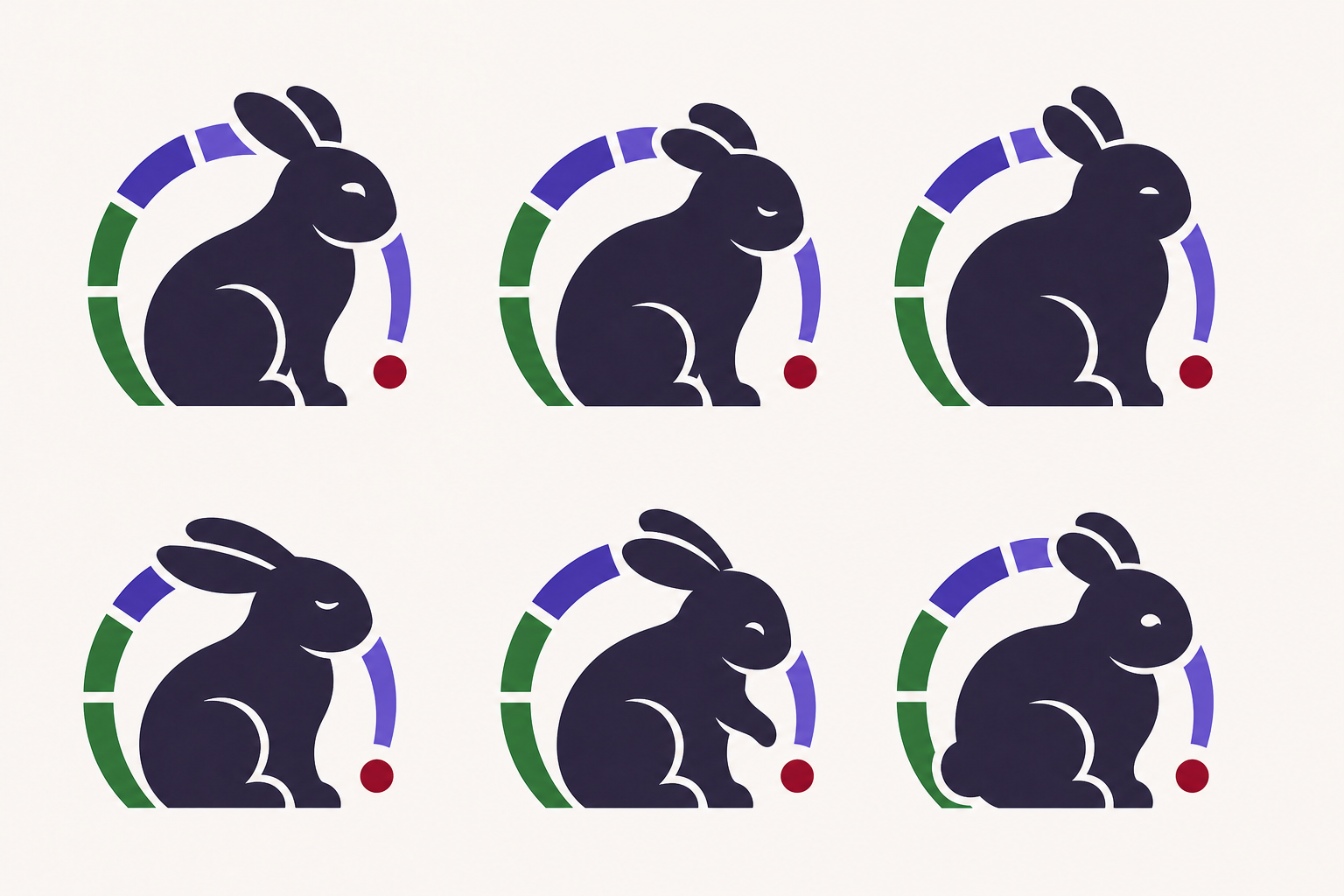
Useful for body and ear proportion, but a few eye treatments are too round and should be rejected if we move forward.
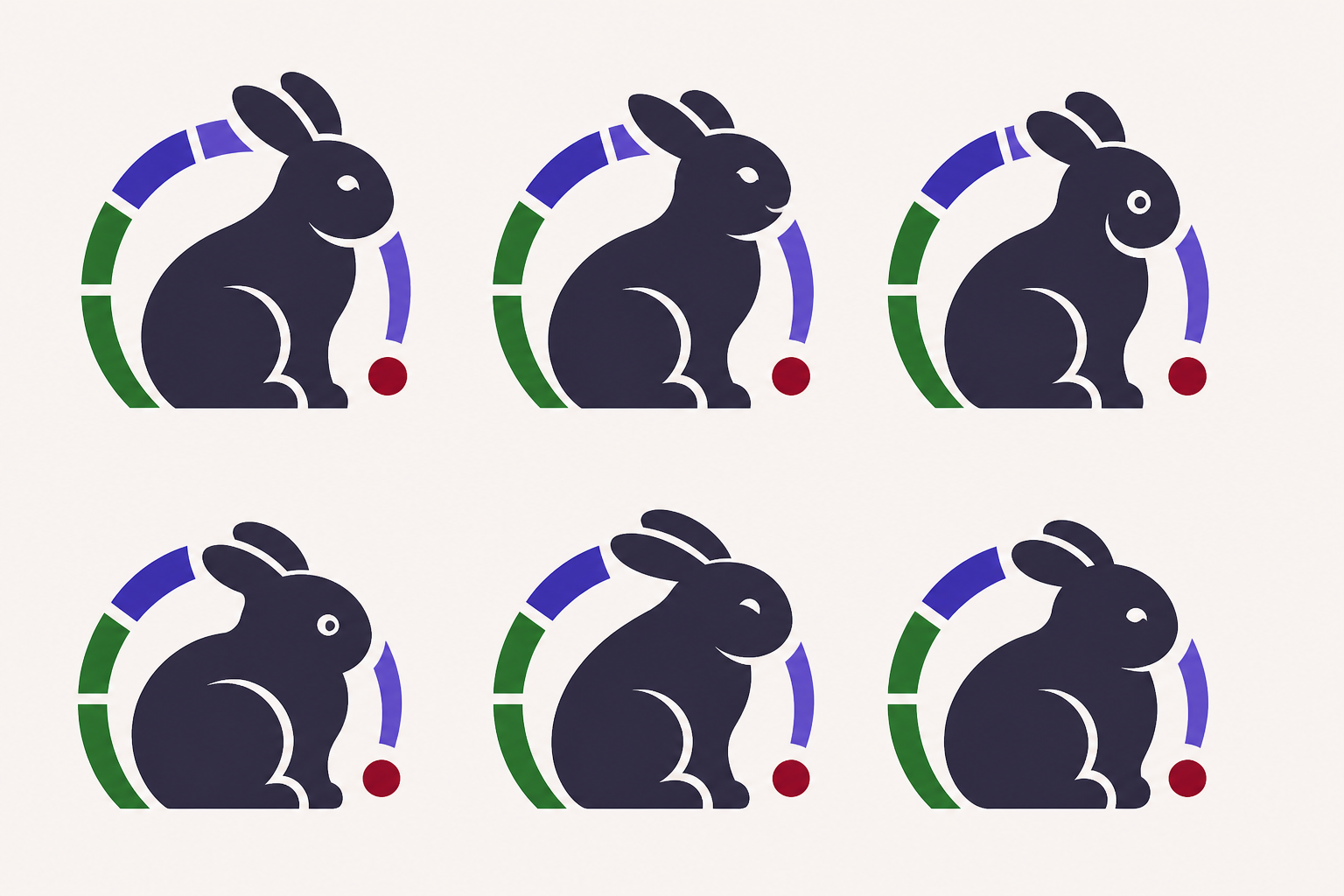
The strongest corrective pass: same integrated arc, same lower-right endpoint dot, but noticeably different ear, cheek, eye, posture, and helper reads.
Less divergent and more final-mark oriented. Useful after picking a personality from the wider board.
The gauge stays consistent while the bunny shifts from companion to scout to operator to responder. This is the stronger pass for finding the emotional center.
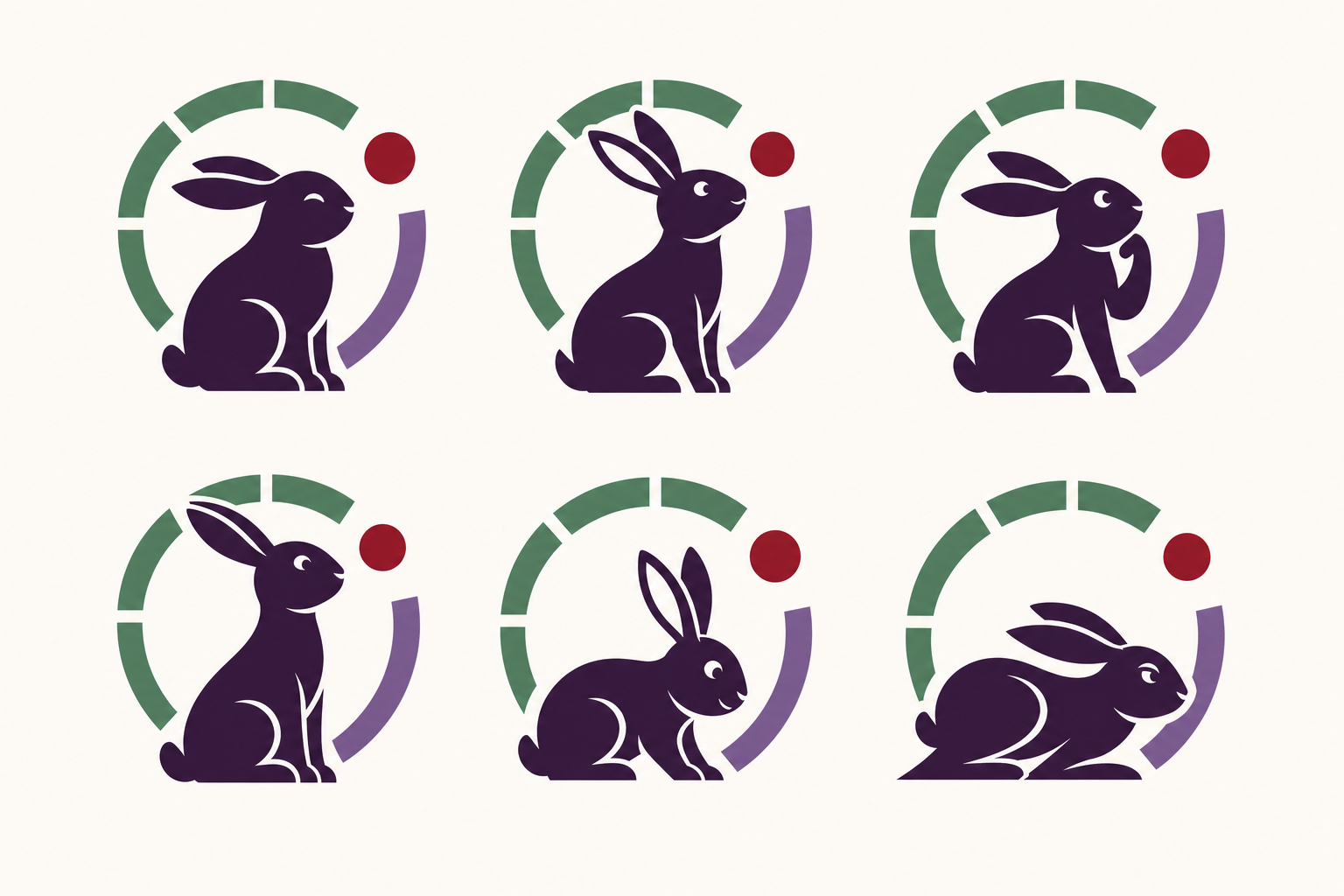
More restrained, more icon-like, and less mascot. The top-left and bottom-middle feel especially useful for friendly-but-adult.
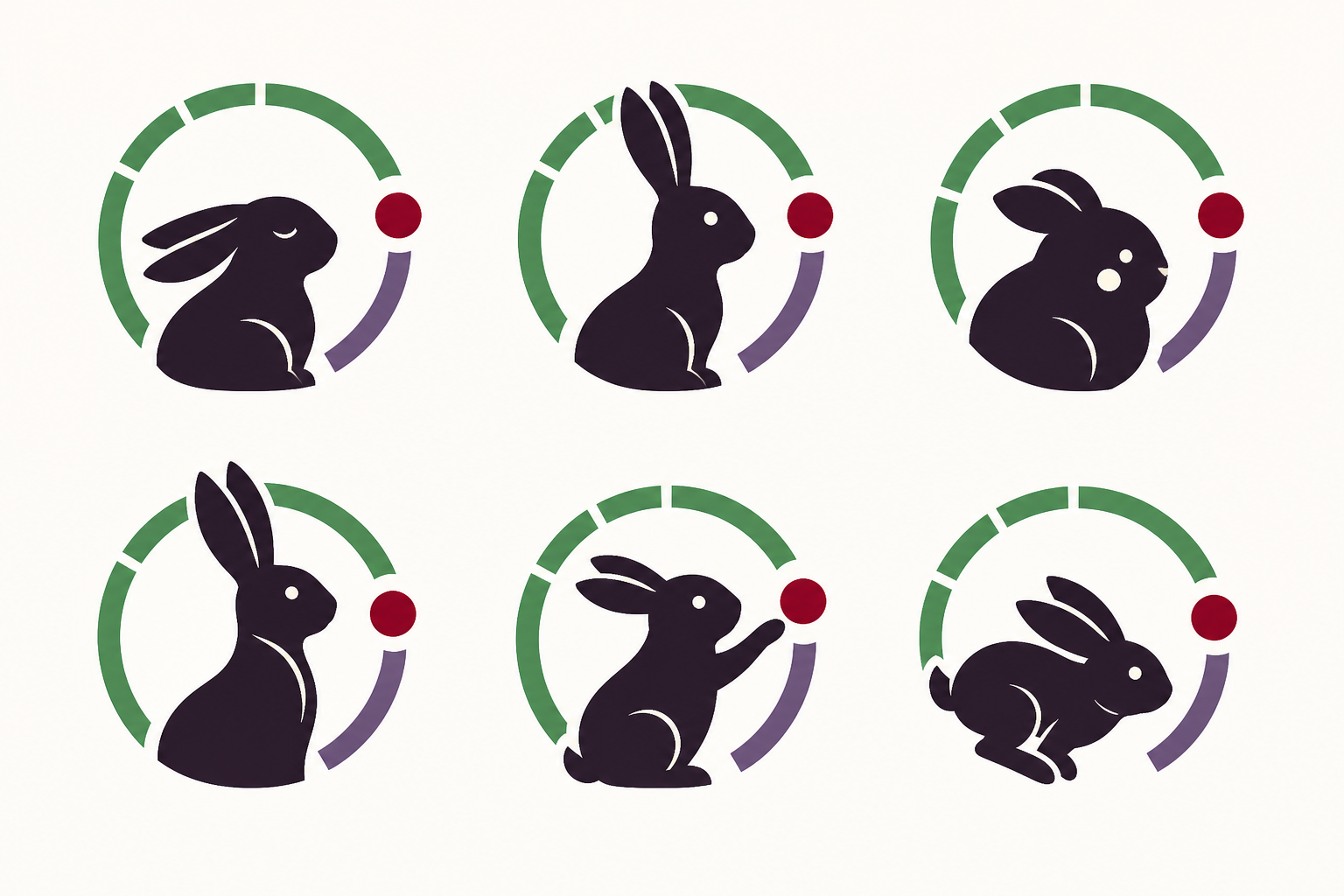
More companionable and calm. Best for testing whether the brand can feel helpful without getting cute.
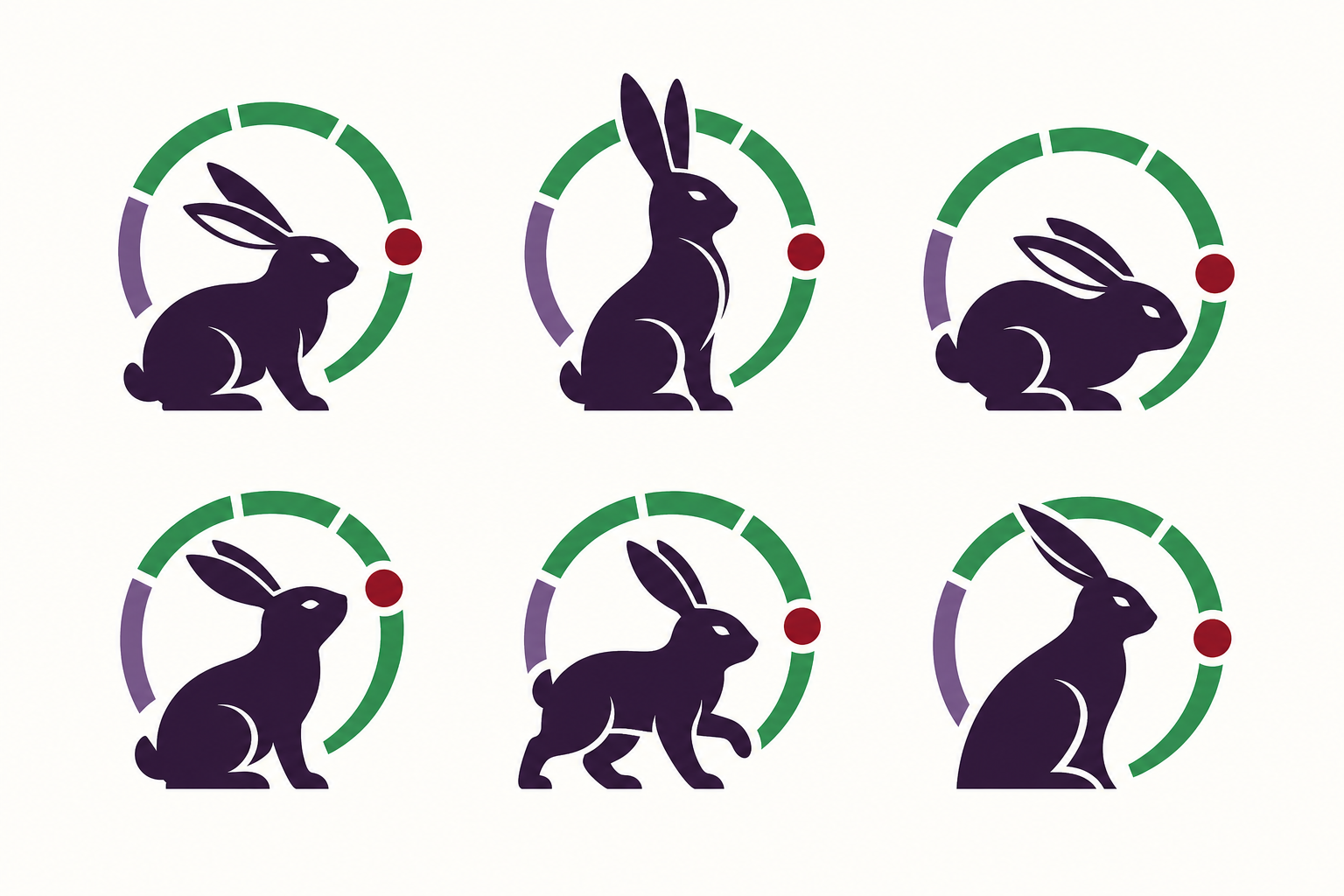
Sharper silhouettes and more motion. Best for testing how much speed the mark can carry while staying warm.
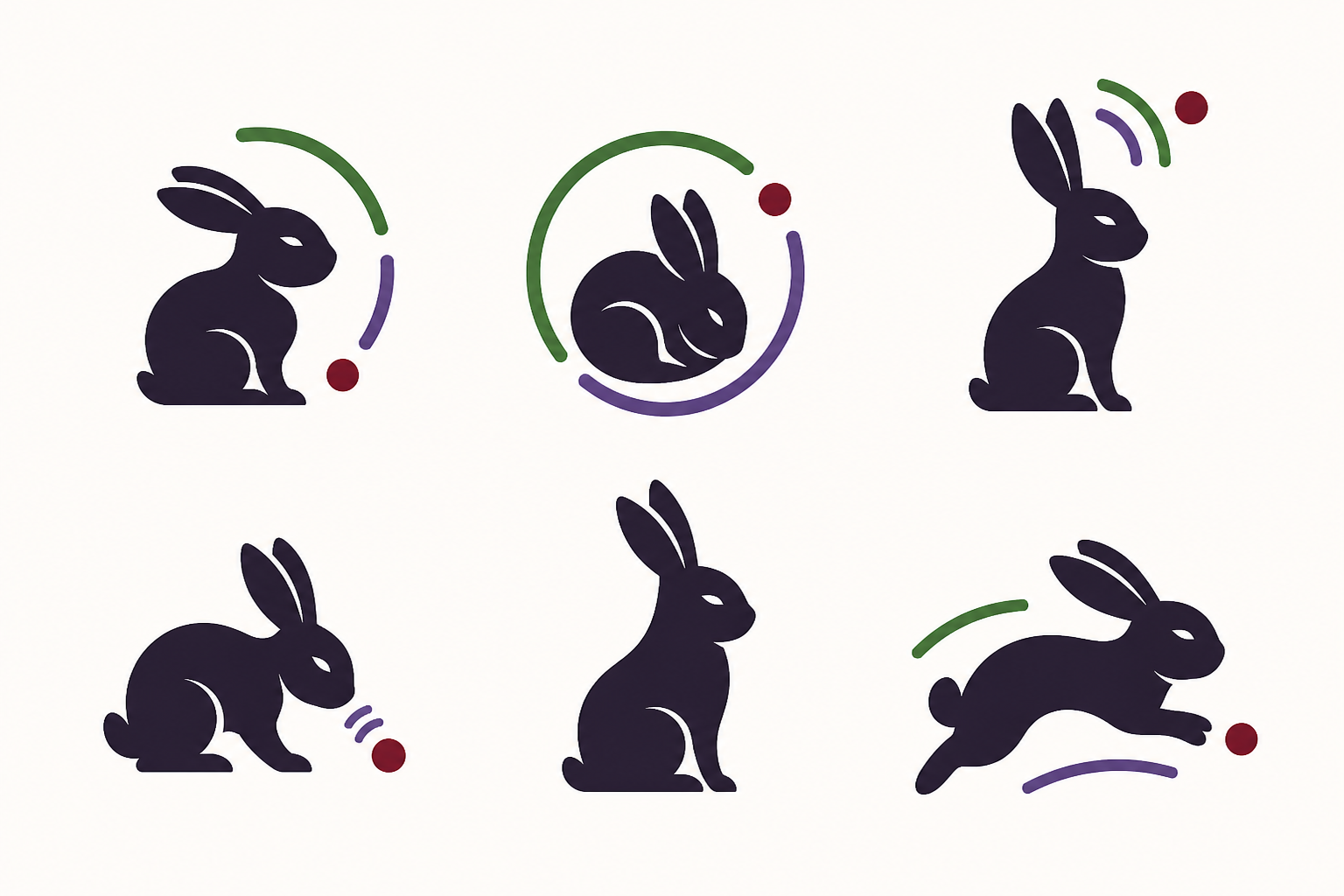
Still useful as a posture reference, but the new speedometer passes have the stronger Cadence system.
Least creature-like. Good coordination metaphor; maybe too abstract for a helper.
Planning routes and many inputs without eyes. Better than literal octopus for brand safety.

Strongest rabbit-family motion mark. Warmth plus speed, but less meaning-specific than bird.

Most abstract rabbit option. App-icon potential, but may be too clever without context.

Octopus brings back the useful-helper personality: many inputs, many arms, coordinated planning. It may work better as the assistant/avatar than as the company mark.
Master brandIn-app helperSafest fallback if the bird becomes too decorative.
Active refinement: softer cheek, gentler posture, richer red signal dot.

Previous softer control. Slightly sharper and less plush than the active version.

Sharper and more iconic. Keep as the control until the softer version clearly beats it.

Motion path if hummingbird feels too delicate.